

Writer: Jay B. Kalagayan
Illustrator: Feriowind
Creative Mussel, January 2026
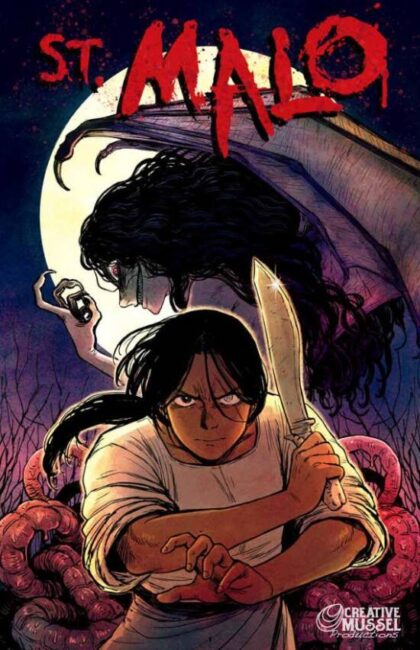
St. Malo #1 opens with a clear sense of purpose, combining historical context, cultural identity, and horror without overcomplicating its premise. Written by Jay B. Kalagayan and illustrated by Feriowind, the comic draws from the real history of early Filipino settlements in Louisiana and filters it through a darker, supernatural lens.
The book is rooted in the story of St. Malo, recognized as one of the first Filipino communities in what would become the United States. A brief timeline at the start, compiled with input from historian Makialani Kanewa-Mariano, lays out the journey of Filipino migrants who escaped servitude and established a life in the Louisiana swamps. While not strictly necessary to follow the narrative, this grounding in real history adds weight to the story and gives the setting a sense of authenticity that carries through the rest of the issue.
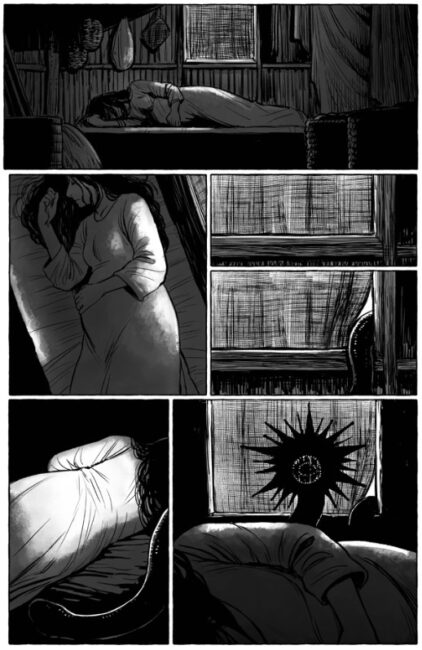
The horror element is introduced immediately, by way of an opening sequence involving a pregnant woman being attacked by an unseen creature. The violence itself is kept just out of view, but the aftermath is depicted in stark, bloody detail. It sets the tone effectively, establishing that this is a story willing to engage in a visual exploration of brutality.
From there, the focus shifts to Mutya, a recently widowed mother, and her daughter Tala. When elders in their community urge Mutya to leave her isolated home due to the recent attack, she refuses, insisting that they can take care of themselves. That decision defines her character early on. She is not reckless, but resolute, someone who understands the risks and chooses to face them anyway.
As the story unfolds, it becomes clear that Mutya has the ability to see and communicate with the dead. Through her interaction with the spirit of the murdered woman, Lyka, the nature of the threat is revealed: a Manananggal. In Filipino folklore, the Manananggal is a particularly disturbing creature, often depicted as a woman who can separate her upper torso from her lower body, sprouting bat-like wings and flying into the night to hunt. It preys on humans, with a specific and horrifying preference for unborn children, using an elongated tongue to feed on fetuses from within the womb. The comic presents this concept clearly enough that even readers unfamiliar with the folklore can understand the stakes. Mr Kalagayan leans into the inherently grotesque nature of the creature, and does not soften the legend even though it concerns the murder and devouring of babies in utero.
The confrontation between Mutya and the Manananggal forms the climax of the issue, and it plays out in a way that reinforces her characterization. What initially appears to be a vulnerable moment quickly shifts as it becomes evident that Mutya has prepared for this encounter. She relies on traps, improvised weapons, and quick thinking rather than brute strength or combat expertise. The tension is heightened when the creature becomes aware of Tala’s presence. The sequence ultimately underscores Mutya’s determination and capability as she manages to kill the monster. It is not framed as an effortless victory, but as the result of planning and resolve.
One of the strongest aspects of the comic is how it balances its cultural elements with its horror narrative. As we noted, the story does not require prior knowledge of Filipino history or folklore, but that context adds a distinct identity that sets it apart from more generic horror titles.
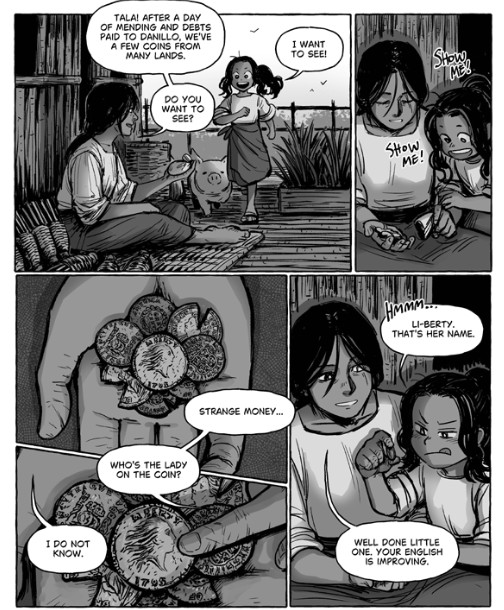
Feriowind’s artwork plays a major role in bringing all of this together. Working in monochrome, the art makes effective use of shadows and gradients to create depth and atmosphere. The level of detail is consistently high, with careful attention given to both the environment and the characters. This precision is especially important in a horror comic, where clarity can make the difference between impact and confusion. The design of the Manananggal benefits from this approach. The ghoul’s grotesque form leaves little to the imagination and reinforces the unsettling tone of the story.
There are no missteps in this first issue. The historical timeline at the beginning, while informative, may feel optional to some readers, but it does not detract from the narrative. If anything, it enhances the overall experience by providing context that enriches the setting.
St. Malo #1 succeeds as both a horror story and a culturally grounded narrative. It introduces its world, its central character, and its primary threat with clarity and confidence, while leaving enough room for the story to expand in future issues.
This title is for sale via the following Ko-fi link: St. Malo – Creative Mussel’s Ko-fi Shop