


Creator: Joshua Ross
Source Point Press, May 2026
Published by Source Point Press and written and illustrated by Joshua Ross, Divinity Calls Shotgun is a hefty 200-page graphic novel packed with explosive action, irreverent humor, and a surprisingly thoughtful exploration of heaven, hell, and the cosmic bureaucracy that keeps existence running. What begins as a quirky supernatural adventure gradually evolves into a sprawling tale about power, responsibility, and the strange individuals tasked with maintaining the balance of the universe.
The publisher describes the book as follows:
“God is dead and Mitch doesn’t realize he’s in line to become the next God. Unfortunately, there are other players in this game as the balance of the Universe is at stake. It’s only been a few days but without divine guidance and a Lord to take charge, Heaven is overworked and thoughts and prayers are beginning to back up. Ancient deities and demigods clash in a battle for power. Giant kaiju and demonic forces are free to wander across the earth. It’s going to take Eternity and a fallen angel to restore order and hopefully reset the balance of the cosmos before all of existence is wiped clean.”
Like its earlier peer, Kill Six Billion Demons by Tom Parkison-Morgan (see https://worldcomicbookreview.com/2019/07/12/kill-six-billions-demons-volume-1-review/ ), one of the most impressive aspects of Divinity Calls Shotgun is its world-building. Creator Joshua Ross delivers a masterclass in meaningful exposition, introducing readers to a complex setting without overwhelming them. The story opens with an unseen narrator providing a concise explanation of how the universe functions, immediately establishing the rules that govern heaven, hell, and everything in between. What elevates the material above many other divine fantasy stories is Mr Ross’ refusal to treat the subject matter with excessive reverence or self-importance.
Stories dealing with gods, devils, and cosmic forces often attempt to create a sense of incomprehensible grandeur. Mr Ross instead takes the opposite approach. Through sharp wit, clever wordplay, and an abundance of humorous observations, he makes the universe feel surprisingly relatable. In Divinity Calls Shotgun, heaven and hell operate less like unknowable cosmic realms and more like governments, corporations, or bureaucratic institutions. Angels, demons, principals, and rulers all have responsibilities to fulfil, reports to file, and duties that can either be performed diligently or delegated to someone else. Even the divine beings themselves are presented less as eternal entities and more as positions within a cosmic hierarchy. If someone dies, retires, or fails to meet expectations, another individual can take their place.
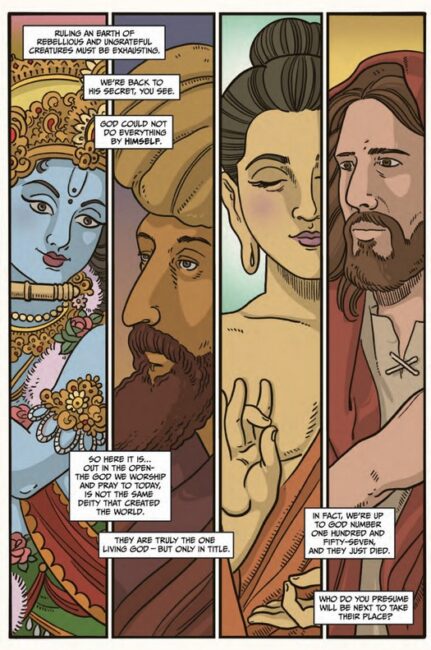
Despite its expansive scope, the story begins on a relatively small scale. Readers are introduced to Mitch, an ordinary man who unknowingly stands next in line to inherit the title of God following the death of the previous holder. Mr Ross wisely sidesteps potential theological pitfalls by establishing that the “God” overseeing the universe is not the ultimate creator. Instead, the role is simply another office within the cosmic order, one that can be inherited, relinquished, or lost.
Naturally, not everyone wants Mitch to ascend.
Soon demons begin plotting to prevent his promotion by hiring an assassin named Jessie. We see evil penguin demons and giant Godzilla-like monsters to talking squirrels and even Lucifer himself. It is a colorful cast of characters amidst the fray, either attempting to eliminate Mitch or keep him alive long enough to assume his destiny. Then the story delivers a genuinely surprising twist. Jessie kills Lucifer, claims the power of Hell for himself, then murders Mitch and acquires the authority of Heaven as well, effectively ascending to godhood before Mitch ever gets the chance.
The twist completely redefines the direction of the narrative.The story reveals the true protagonist: Nyssa, a deceased woman whose body has become the vessel for Eternity itself, the cosmic embodiment charged with restoring order after Jessie’s catastrophic rise to power.
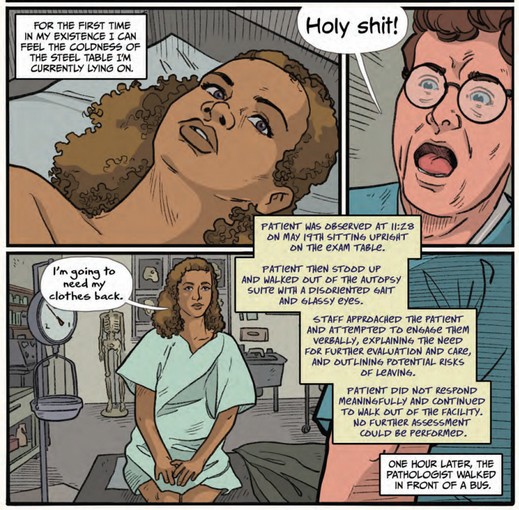
Mr Ross notes that Jessie never sought godhood to reshape reality or establish a new order. He merely wanted unlimited power so he could spend eternity relaxing, watching television, and eating soup. Unfortunately for everyone else, his negligence creates a vacuum that allows chaos to spread unchecked throughout creation.
Accompanying Nyssa is Hana, a former angel exiled after killing her own god. Together they form an engaging central partnership that helps anchor the increasingly bizarre and cosmic events unfolding around them.
Mr Ross’ writing remains consistently strong throughout the book. Character voices are distinct and believable, helping the large cast feel memorable despite the story’s ambitious scope. Hana, having spent considerable time among humans, speaks naturally and conversationally, while many of Hell’s inhabitants utilize more archaic and anachronistic speech patterns. There are occasional moments where characters speak in unexpectedly modern or unusual ways, but these instances are typically intentional and played for comedic effect, particularly among some of the more eccentric demons.
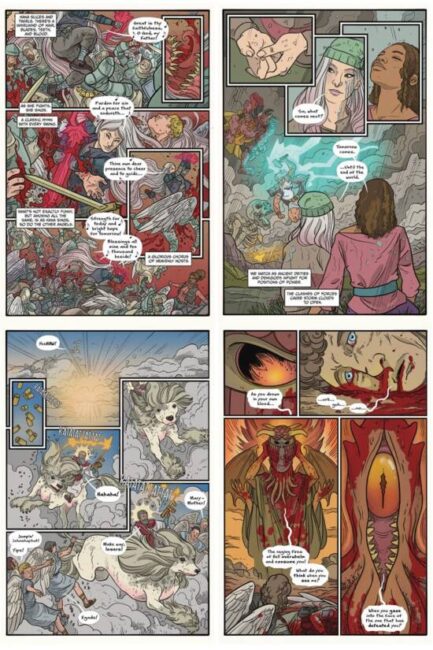
Visually, the book is equally impressive. Mr Ross employs clean, uniform black linework supported by meticulous fine-line shading that adds texture and depth to both characters and environments. The result is a style that feels organic and handcrafted. In an era where many comics pursue increasingly polished digital aesthetics, Divinity Calls Shotgun stands apart through its embrace of what nowadays we would call traditional comic book illustrative techniques. The artwork possesses a tangible warmth and personality that complements the book’s blend of cosmic fantasy and occasionally absurdist humor.
At 200 pages, Divinity Calls Shotgun has plenty of room to explore its setting, and Mr Ross takes full advantage of that space. The result is an ambitious graphic novel that balances high-stakes supernatural action with sharp comedy, inventive mythology, and memorable characters. It is a story filled with giant monsters, fallen angels, demonic conspiracies, cosmic embodiments, and divine succession crises, yet it never loses sight of the human element at its core.
For readers who enjoy imaginative fantasy worlds, unconventional takes on religious mythology, and stories unafraid to mix epic stakes with absurd humor, Divinity Calls Shotgun is an easy recommendation. It is a wildly entertaining ride that proves even the machinery of the cosmos can be subject to office politics, poor management, and the occasional desire to sit on a couch eating soup.
This title as, as at today, more than doubled its target goal in a Kickstarter campaign: https://www.kickstarter.com/projects/1618560840/divinity-calls-shotgun