

Creator: Olivia Sullivan
Avery Hill Press, April 2026
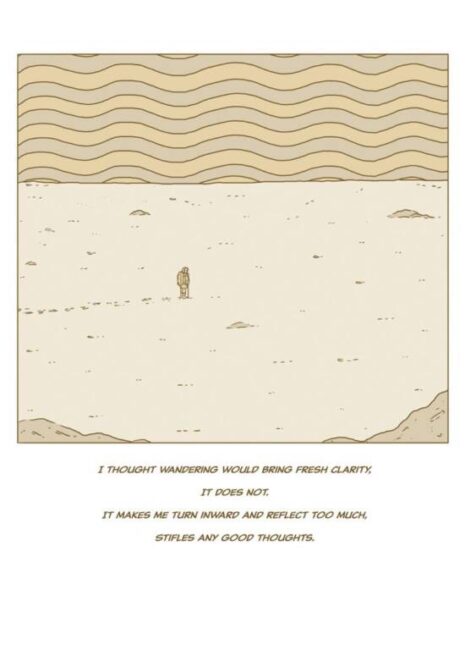
Oracles by Olivia Sullivan is likely to be a very different reading experience for those whose comic book diets consist primarily of mainstream superhero titles, manga, or even most independent graphic novels. Published by Avery Hill Publishing (one of our editor’s favorite publishers), this introspective work challenges many of the conventions readers typically associate with comics. It replaces traditional storytelling techniques with a meditative repose.
The publisher describes Oracles as “a journey into the wilderness to find what loss leaves behind.” That synopsis captures the essence of the book well. Overwhelmed by the pressures of everyday life, the unnamed narrator ventures into a series of vast natural landscapes where forests, deserts, mountains, and oceans become stages for personal reflection. Along the way, mysterious guides such as sage creatures, memory-filled mushrooms, and whirlpools help illuminate the narrator’s path through grief, healing, and self-discovery.
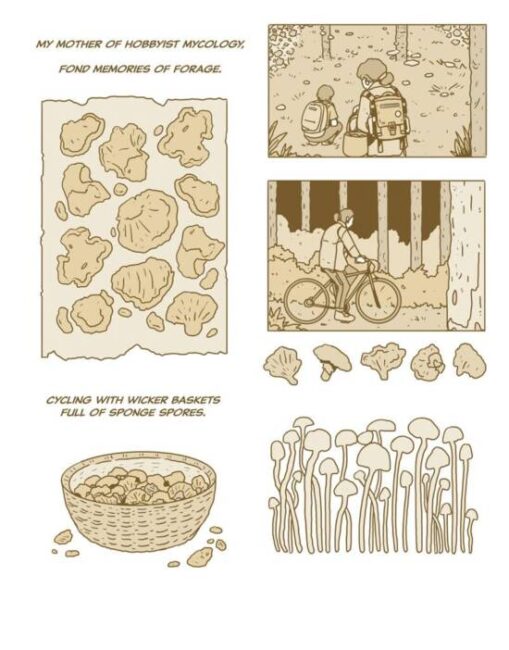
Readers expecting colorful pages packed with dialogue balloons, action sequences, and clearly defined plot beats will be initially disoriented. Oracles offers very little hand-holding. Ms Sullivan constructs an experience built around contemplation and interpretation. The book feels less like reading a conventional comic, and more like leafing through an old photo album , embellished by fragments of a travel journal. Each page invites readers to pause, absorb, and consider the emotional significance behind both the prose and the imagery.
That is not to say there is no story. Oracles chronicles a deeply personal journey through grief. However, the specifics of that grief, and the transformation that follows, are not spelled out. Instead, readers are asked to engage actively with the work, piecing together meaning through careful attention to the narrator’s reflections and the symbolic landscapes she encounters. The result is a portal for thoughtful reading.

Marcus Aurelius, referenced above, is probably best known nowadays not so much for being a Roman emperor as being the author of the Stoic text which we call Meditations. Marcus Aurelius did not intend for his private thoughts to ever be read by a broad audience, and there seems to be something of that privacy in Oracles.
Visually, Oracles complements its themes beautifully. Ms Sullivan employs earthy color palettes and a deliberately minimalist art style. It may remind some readers of illustrated children’s books. We think there is a deliberate juxtaposition between the simplicity of the art with the emotional depth. The muted tones and sparse compositions create an atmosphere that is both somber and comforting. The artwork seems to function as an extension of the narrator’s internal state. Every image feels carefully chosen to evoke mood rather than spectacle.
Oracles will not be for everyone. Readers looking for a fast-paced plot or clear-cut answers may struggle to find their footing. However, those willing to meet the book on its own terms will discover a poignant meditation on loss, memory, and healing. It is a graphic novel that values reflection over resolution, inviting readers to sit with difficult emotions rather than rush past them. In doing so, Ms Sullivan has created a work that feels less like a story being told and more like an experience being shared.
Oracles is available for sale via this link: https://averyhillpublishing.bigcartel.com/product/oracles-by-olivia-sullivan