

Writer: Cian Duggan
Artist: Pytr Mutuc
Independent, 2026
Writer Cian Duggan and artist Pytr Mutuc’s science fiction comic, Atlantica (2998), throws readers straight into a heavily policed, oppressive future. It features high-tech staples like cybernetic enhancements and rogue holograms, but the vibe here is highly specific. Think the rain-slicked, neon urban decay of Cyberpunk 2077 mixed with the high-anxiety surveillance state of Minority Report. It is familiar, but it possesses its own distinct edge.
The plot kicks off with Lynch, a scarred World War III veteran who heads to the city of Atlantica after his uncle dies. Along with whatever property he has inherited, he gets a cryptic directive: track down an old wartime buddy named Guliano Genovese. Lynch makes an immediate impression. He is a massive figure in a trench coat, constantly smoking, and sporting a working-class English accent. Lynch is a visual doppelganger for DC Comics’ cleverman John Constantine, if Constantine gave up the street magic and took up heavyweight boxing.
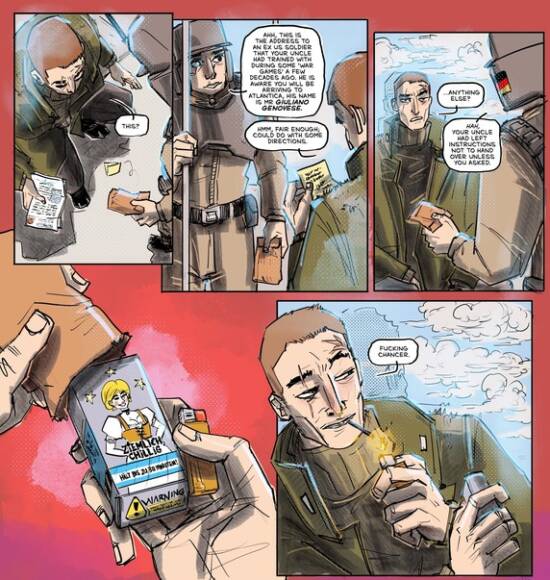
Things take a turn once Lynch actually lands in the city. Instead of hiring him for standard muscle work, Genovese tasks him with an assassination plot to disrupt the Apuli Family, a cartel trying to corner the local drug market. To do it, Lynch teams up with Dikembe. Dikembe’s lighter, more conversational energy contrasts with Lynch’s quiet, brick-wall demeanor.
Naturally, they underestimate their targets, and the mission devolves into a massive, destructive shootout that leaves a lot of property damage and a very bloody message to the Apuli syndicate.
Mr Duggan keeps the pacing tight, avoiding the usual sci-fi trap of burying the reader under mountains of future lore. The world-building seeps out by way of the background details and everyday dialogue, helped by the fact that Lynch is an outsider to Atlantica. Because he does not know how Atlantica works (and does not care for polite enquiry), we learn about the city as he does. It cuts out the need for clunky information dumps.
When the guns finally come out, the action lands hard. The panels are packed and chaotic, but the choreography stays clean and easy to follow. You can easily see these action sequences translating straight to a live-action thriller.
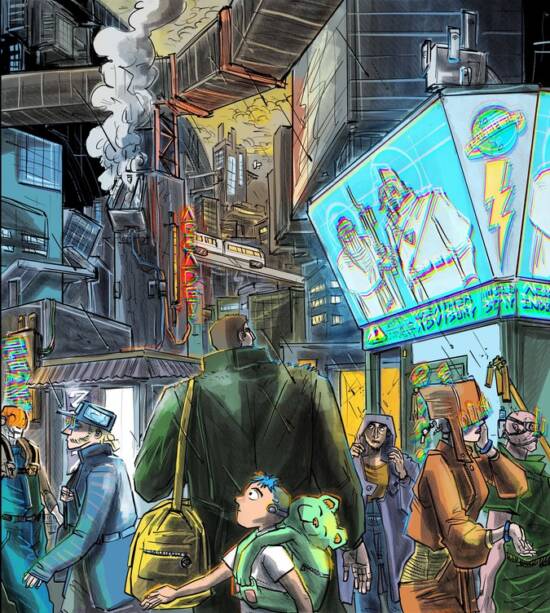
Mr Mutuc’s art style matches this gritty tone beautifully. Instead of clean, digital lines, the book relies on rough sketches, visible construction marks, and raw, expressive strokes that make every panel feel kinetic. The character designs are heavily stylized but full of life, and Mr Mutuc draws the city with a loose perspective that cares way more about mood than architectural accuracy. The colors lean hard into the classic cyberpunk playbook, washing rain-slicked streets in deep blues and purples, then slashing through them with bright hits of neon pink, yellow, and cyan. The standout visual choice is how Mr Mutuc handles tech: holograms and screens feature glitchy, chromatic aberration effects that pop against the otherwise scratchy, hand-drawn art. Cyberpunk is dystopian, where future perfect is broken, erratic, trashy and florescent. Mr Mutac’s art is unmistakably, wonderfully cyberpunk.
For a debut issue, Atlantica (2998) delivers a remarkably confident start. It uses the visual language of cyberpunk but does not let the aesthetic do all the heavy lifting, opting instead to focus on sharp character dynamics and purposeful storytelling. Lynch is a fantastic anchor for the series, and the city itself has plenty of secrets left to unpack. If you are looking for a sci-fi crime story with real teeth, this one is absolutely worth picking up.
This title is free to read on the Globalcomix website: https://globalcomix.com/c/atlantica