

Creator: Kang Jing
Chiral Comics, August 2026
Lionborne #2 builds confidently on the foundation of the first issue (which we have reviewed). With the introductory world-building out of the way, creator and artist Kang Jing focuses on expanding the story and characters.
The first issue introduced Jayden, his supernatural transformation into the Lionborne, and the looming dangers around him. While that debut occasionally rushed through its transitions, this second instalment settles into a comfortable rhythm. Instead of trying to introduce every major concept at once, the second instalment deftly balances several objectives. It advances the central conflict, develops the relationship between Jayden and Simha, and explores the unique powers that elevate the Lionborne beyond a typical young superhero.
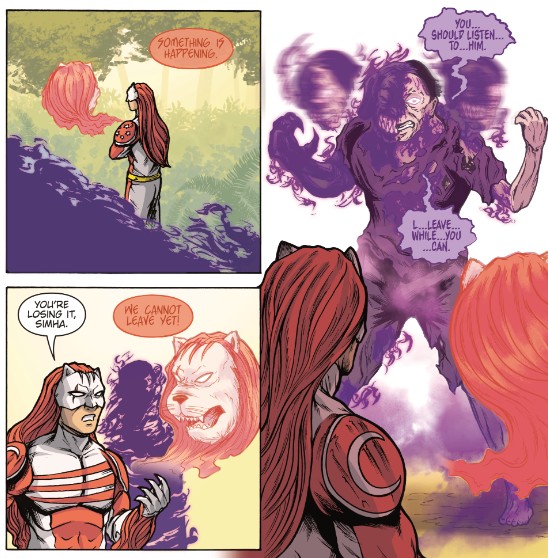
One of the title’s biggest strengths is the mythology. Readers get another glimpse of the larger threat awaiting the protagonists, reinforcing the sense that the dangers facing Jayden extend far beyond the opening chapter. At the same time, flashback sequences reveal more about Simha and Jayden’s shared history, adding welcome emotional context to their partnership. These moments help transform what could have been a purely action-driven comic into one that steadily builds character alongside spectacle.
The action remains the highlight. Jayden’s abilities are showcased through several energetic fight scenes, first against ordinary henchmen before escalating into a confrontation with a far more unusual opponent. The introduction of a shadow-like enemy who cannot be harmed through conventional attacks forces the conflict beyond simple strength, hinting that future battles may require ingenuity as much as raw power. These encounters also give Kang Jing plenty of opportunity to demonstrate the dynamic visual storytelling that stood out in the first issue.
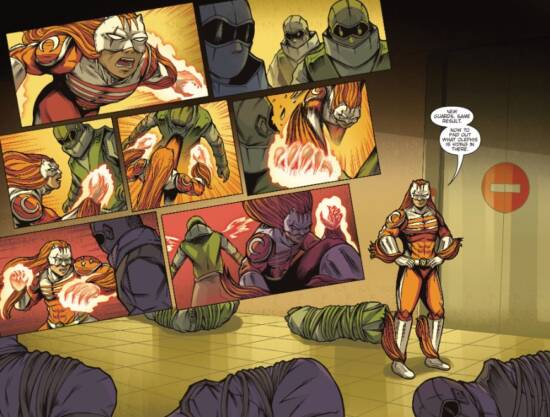
Visually, Lionborne continues to impress. Kang Jing’s artwork is clean, colorful, and easy to follow, with expressive character work and energetic page layouts that guide the eye naturally through the action. This is a superhero comic, and so individual combat between characters is inevitable. Visually expressing a melee however is not as easy to render as it sounds. Even highly experienced and well-regarded artists like Alex Ross can fall into the trap of making fight scenes cluttered. That does not happen here. The busiest fight scenes are readable without sacrificing excitement.
The issue closes on a cliffhanger (Charles Dickens taught us that all good episodic stories should end on a cliffhanger) with the discovery of the assassin from the first issue, who is gravely wounded yet somehow still alive. It is a satisfying hook: it raises immediate questions while maintaining the sense that a much larger mystery is gradually unfolding.
Lionborne #2 demonstrates the benefit of a strong opening chapter. Having already established its world and central premise, the series can now devote more attention to character development, deeper worldbuilding, and inventive action. It remains an accessible supernatural superhero adventure with a distinctly Singaporean identity, with an increasing narrative confidence. This issue is supported by a Kickstarter campaign, which will launch shortly: https://www.kickstarter.com/projects/chiralcomics/lionborne-1-2-spirit-mutations-part-i?utm_id=97758_v0_s00_e0_tv2_a1demons47lr3i