



Publisher: Dynamite Entertainment, May 2026
Writer: Joe Casey
Art: Robert Carey

Dynamite Entertainment’s Ben 10 #1 arrives carrying a surprisingly specific set of expectations weighing upon on its figurative shoulders. Ever since co-creator Joe Casey compared the project to the “Absolute” or “Ultimate” style reinventions popularized by modern superhero comics, many fans immediately assumed this would be a radical, adults-only overhaul of the classic Ben 10 formula. That comparison created the wrong impression of what this comic actually is.
That is because the new series is not some ultra-violent deconstruction that tears the property apart in pursuit of grimdark realism. Instead, Ben 10 #1 feels more like a carefully modernized retelling of the original premise, one that updates the visuals and tone without abandoning the adventurous spirit that made the cartoon so popular in the first place.
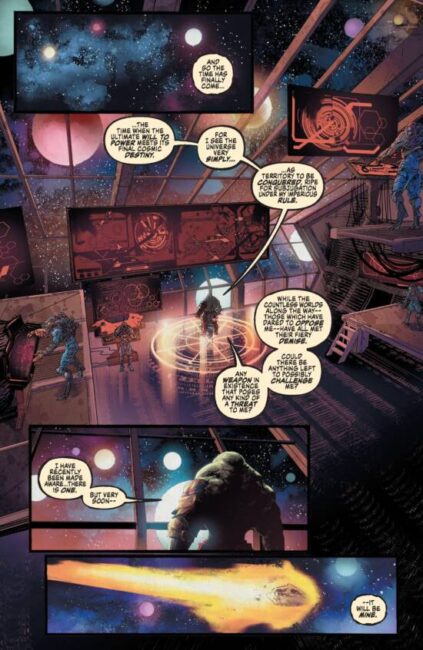
The setup remains comfortably familiar. Ten-year-old Ben Tennyson joins his cousin Gwen and Grandpa Max on a summer camping trip when a mysterious extraterrestrial object crashes nearby. Ben investigates and discovers the Omnitrix, reimagined here as a more intimidating alien gauntlet that permanently latches onto his arm and grants him the ability to transform into different, powerful alien beings with names such as such as Heatblast and Four Arms.
From there, the comic largely succeeds by understanding exactly what it needs to do and, more importantly, what it doesn’t need to do. Thankfully, the framework of the original cartoon is fully intact. Ben is still impulsive, energetic, and immature in believable ways, although his dialogue now carries a slightly sharper and more sarcastic edge than the animated version. Ben is, after all, a teenage boy: but an actual kid rather than a brooding antihero awkwardly inserted into a children’s property, which is what we see with an analogous series we frequently review, Space Ghost.
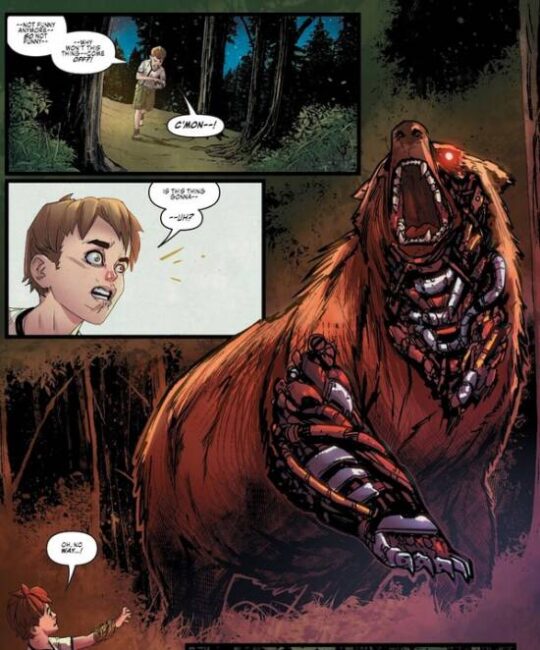
The biggest change to the format of the franchise are in its presentation. Artistically, this is clearly a grittier interpretation of the universe. The alien transformations have lose the rounded, toyetic charm of the cartoon designs in favor of harsher biomechanical details and more grounded science-fiction aesthetics. At times, the Omnitrix transformations flirt with mild body horror imagery, though never to the point where the comic becomes outright grotesque. The aliens remain immediately recognizable from their cartoon versions, but are instead filtered through a lens of borderline cyberpunk faux-realism. This had been touted on social media by Dynamite long before release of the first issue:

That balance ultimately becomes the issue’s greatest strength. Dynamite and the creative team understand that making a children’s franchise darker does not automatically make it more mature. Rather than overcompensating with excessive violence or edgy shock value, the comic focuses on presenting the classic mythology with slightly more texture and intensity while still remaining accessible to longtime fans of the original show. Those fans are now, after all, in their 30s. And the sales indicate there is a market: this first issue sold out in its print fun of 82000. It is unlikely to be remembered as an all-time great comic debut, but that feels beside the point. This is fundamentally an adaptation of a mainstream action cartoon, and the script wisely prioritizes clarity, pacing, and character familiarity over unnecessary reinvention. It retells the origin efficiently without feeling embarrassingly dated or excessively beholden to nostalgia.
Overall, Ben 10 #1 succeeds because it resists the temptation to become something it was never meant to be. Fans expecting a full-blown “Absolute Ben 10” may come away surprised by how restrained it actually is, but readers willing to accept it as a more mature, visually grounded reinterpretation of the classic series will likely find plenty to enjoy.