



Creator: Theresa Chen Arzola
March 2026
In Beyond the Road, Theresa Chen Arzola recounts a four-day RV trip along California’s Big Sur coast, exploring what it means to reclaim a sense of adventure when circumstances have made even the simplest journeys difficult.
At 90 pages, this full-color graphic novel draws from Ms Arzola’s own experiences with chronic illness, her relationship with her husband, Juan, and their Pomeranian dog, Titan, to tell a personal story about rediscovery. What emerges is an intimate account of learning to embrace the world again, even when it refuses to cooperate with your plans. Here is the promotional copy:
Years ago, travel was central to who I was. But in 2015, a chronic illness changed everything and I had to trade my spontaneity for control, learn to manage my triggers, and slowly made peace with a reality that wasn’t going away.
In 2021, I set out with my partner Juan and our Pomeranian Titan in a rented RV, navigating the winding Pacific coastline alongside the challenges of my health. It was the 1st step in my journey back to adventure, one cautious mile at a time.
Beyond the Road is a story about perseverance. It’s ultimately about learning to live with chronic illness without letting it define you and seeking adventure despite life’s barriers.
So whether you love thoughtful travel stories, reflective memoirs, or just need a reminder that it’s okay to take the long way around, Beyond the Road may just be the cozy read for you.
The narrative begins in early 2020, as COVID-19 lockdowns bring everyday life to a standstill. For Ms Arzola, however, the isolation compounds a struggle that began years earlier. Diagnosed with a severe chronic illness in 2015, she had been forced to abandon a defining part of her identity: travelling to a new country every year. Where once she could satisfy her curiosity through exploration, her condition now demanded careful control over her surroundings and potential exposures.
The pandemic only made an already restricted life feel smaller.
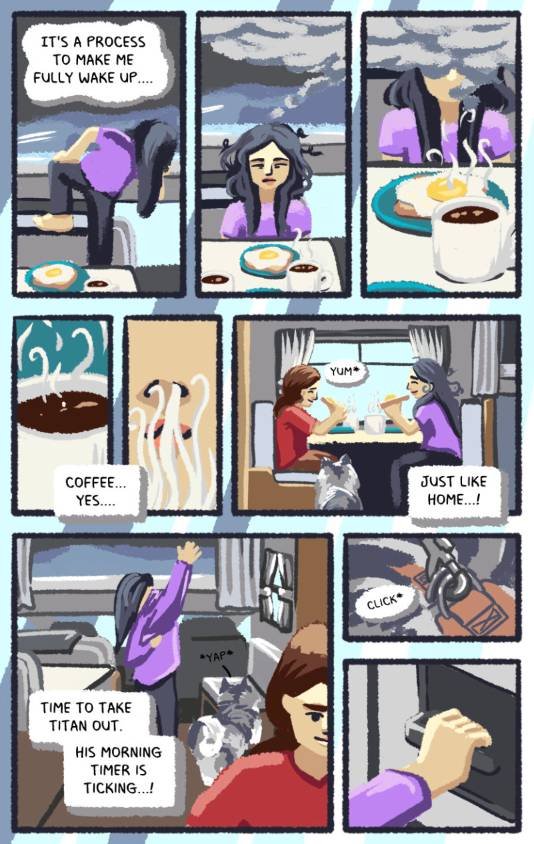
With encouragement from her optimistic husband, Ms Arzola decides to venture outside her comfort zone by renting a Class C RV for a Valentine’s Day weekend getaway. Their plans are relatively modest, but the journey quickly becomes a litany of errors and oversights. Motion sickness, dietary restrictions, confusing parking signs, and an unwelcome parking ticket all conspire to make the trip more complicated than anticipated. Rather than presenting road travel as an effortless route to personal enlightenment, Ms Arzola documents the unglamorous practicalities that can turn an ordinary vacation into an exercise in patience.
These mishaps are among the memoir’s most effective elements. The obstacles are neither particularly dramatic nor extraordinary, yet they carry weight when viewed through the author’s circumstances. A bumpy road or an unsuitable meal might be a minor inconvenience for one traveller, but for someone managing a severe chronic illness, such problems can dictate the course of an entire day. The couple’s willingness to adapt, finding more suitable places to eat and adjusting their plans when their original choices prove impractical, becomes a modest but meaningful expression of perseverance.
For the reader-as-passenger, there is something refreshing about this approach. Travel narratives often emphasize spectacular destinations and transformative experiences, treating the journey as a convenient vehicle for personal growth. Beyond the Road is more interested in the awkward business of getting from one place to another. The victories are small, the setbacks are recognizably human, and its central character does not suddenly become invulnerable simply because she has decided to venture out again. The writer of this memoir understands that rediscovering a part of yourself does not necessarily mean returning to the person you were before. Sometimes, it means finding new ways to accommodate the person you have become.
The COVID-19 pandemic provides the backdrop for this journey. Its presence offers an immediate historical context for the isolation and uncertainty that shape Ms Arzola’s experiences. Readers will recognize the atmosphere of disrupted routines and restricted movement, even if their respective individual circumstances differed considerably. The pandemic was a catalyst for so much creative output amongst independent comics creators: for a time our editor wondered if there should be a COVID category on the portal page of this site.
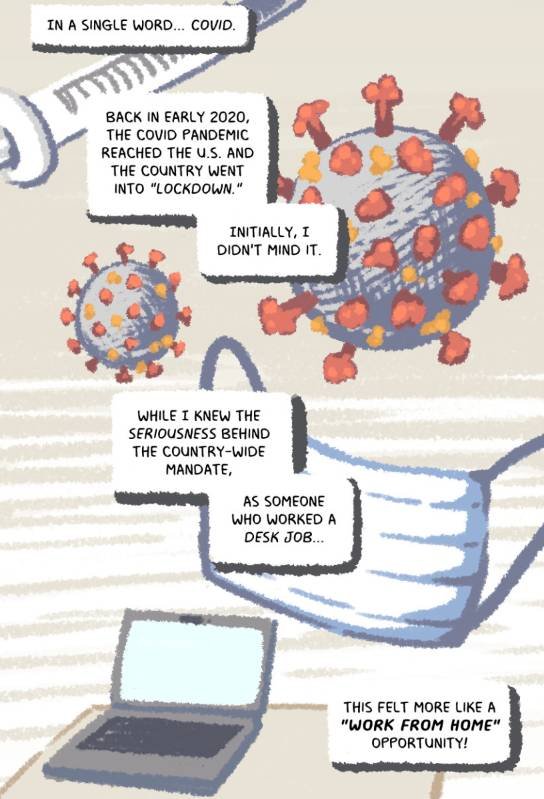
We nonetheless recognize that for some people discussion about the pandemic presents a challenge. Some readers may prefer not to revisit a period associated with lonely deaths, collective anxiety, and exhaustion. (The passage of time might mean specific details of life during lockdown may become less immediately familiar to future audiences.)
The pandemic however is not this memoir’s primary concern. It establishes the circumstances in which Ms Arzola’s restlessness intensifies, but the story’s emotional center lies in her relationship with illness, independence, and the desire to experience the world beyond the limits imposed upon her. Those concerns remain relevant regardless of the historical moment in which the story takes place.
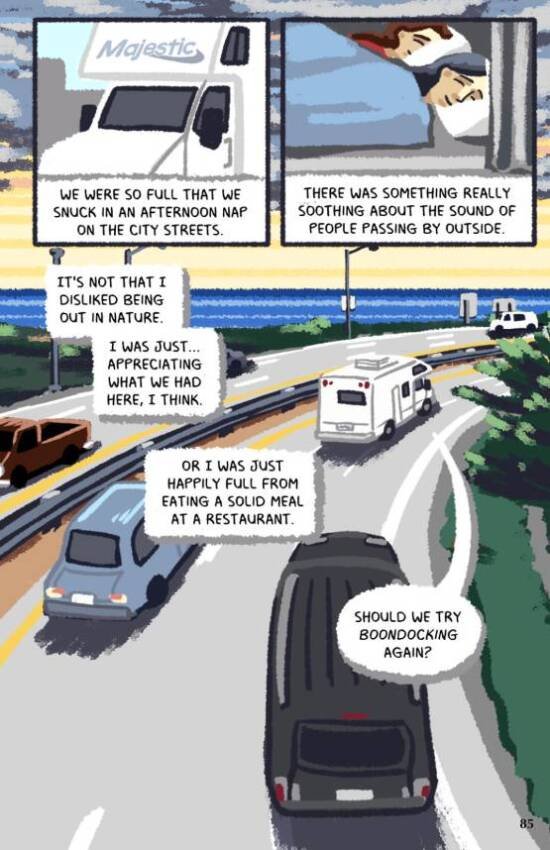
The artwork is another of the book’s considerable strengths. Ms Arzola illustrates the memoir herself, using a hand-drawn style that would not look out of place in a children’s storybook. The lines have a deliberately rough-hewn quality, retaining the imperfections and irregularities that give the pages the feeling of a personal journal brought to life. Rather than distracting from the narrative, this approach reinforces its intimacy. The art feels personal because it is personal, allowing the reader to experience the journey through the same individual perspective that shapes the writing.
Look beyond the apparent simplicity of the drawings, however, and there is a clear understanding of visual composition at work. Ms Arzola makes effective use of the page, balancing the boxy silhouette of the RV against the expansive California coastline and arranging tighter sequences of panels when the journey becomes more frustrating or claustrophobic. The layouts remain readable while making good use of the available space, and the scenery provides a welcome sense of scale without overwhelming the people at the center of the story.
In her Substack blog (https://theresaarzola.substack.com/p/letters-from-theresa-end-of-september ), Ms Arzola describes her creative process. it sounds as meandering and pleasant as the physical journey itself:
After thumbnails are done, I digitally cut up the sheets and lay them out in a Clip Studio comic project (something you can do in Clip Studio Pro only…) and use them as a rough “base sketch”. Then it’s just a matter of drawing, paneling, adding text, and painting each page until it’s done!
Phase 3 is definitely the longest of the phases, and often gets broken down into smaller steps (sketching, inking, coloring, lettering for example), but I can’t say I’ve been following a consistent process for this particular comic. Sometimes I draw & color each panel one at a time. Sometimes I lay out the frames for multiple pages before I start drawing. It’s really just up to what I feel needs to be done first that day.
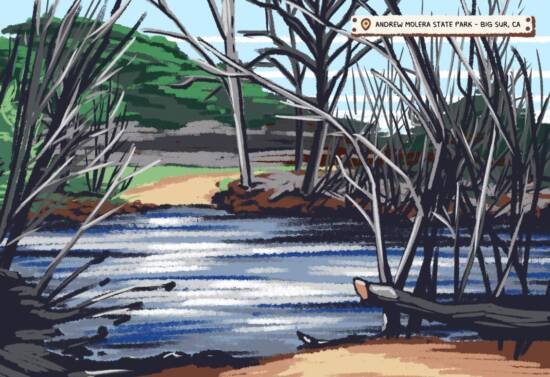
The color palette also deserves particular mention. Its muted, earthy tones capture the chilly atmosphere of a February trip along the Northern California coast. The landscapes have a subdued quality that suits the memoir’s reflective mood. The visuals do not need to be elaborate to be effective. We enjoyed their consistency, with the handmade aesthetic and restrained colors working together to establish a distinctive sense of place.
We think the art complements the memoir’s subject without attempting to make every moment look more beautiful or meaningful than it actually is. The visual presentation leaves room for both discoveries and trials. This balance helps prevent the book from becoming a conventional celebration of travel in which every setback exists merely to make the eventual destination feel more rewarding.
In 1957, American novelist and poet Jack Kerouac wrote On the Road, a road trip narrative which helped define the Beat generation. Beyond the Road and On the Road are very different journeys. Beyond the Road‘s appeal rests less on the novelty of an RV trip than on Ms Arzola’s willingness to document the compromises, frustrations, and adjustments involved in making that trip possible. The hand-drawn artwork gives the story a warmth that supports its introspective narrative, while the everyday obstacles provide a grounded alternative to more idealized travel memoirs or philosophical sojourns. The book does not offer readers a grand revelation about life, nor does it need to. Its more modest achievement is to show how a willingness to keep exploring can survive even when familiar ways of doing so are no longer available.
For readers interested in autobiographical comics, personal stories about chronic illness, or travel narratives that find meaning in the less glamorous details of the journey, Beyond the Road offers a heartfelt and visually engaging account of rediscovery.
You can buy this comic directly from the creator: https://www.theresaarzola.com/books/beyondtheroad/