



Creator: Anh-Thy
Independently published, 2026
My Little Saigon is a 240 page graphic novel written and illustrated by Anh-Thy, exploring the complicated relationship between cultural identity, family expectations, and the weight of inherited trauma.
At its centre is Mai-Anne Nguyen, a 26-year-old Parisian who has spent most of her life trying to meet her parents’ demanding standards. A brilliant student with a promising future in mathematics, she has seemingly done everything expected of her. But with a doctorate within reach, Mai-Anne decides to abandon academia and pursue the one thing she has always wanted to do: draw. She also sets out to find her younger brother Minh, who left home after rejecting the same expectations that had shaped their childhood.
Here is the promotional copy:
Born in the heart of a New Town built by Asian refugees, Mai-Anne Nguyen grew up in the long shadow of her parents’ sacrifices. Caught between the heavy silences of an exiled father and the unspoken trauma of a broken lineage, she played the role of the perfect student. But when expectations become a cage, Mai-Anne walks away from it all. Armed only with a sketchbook and a few fragments of memory, she sets out to find her missing brother through the bars of Paris and the depths of her own history.
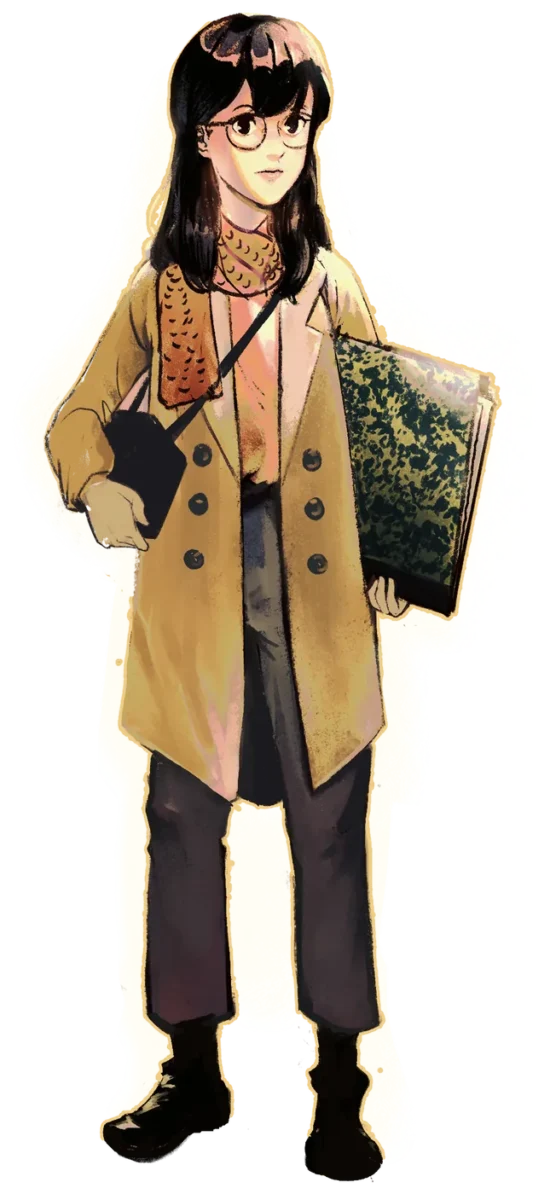
There is a particular burden, a mild form of survivor’s guilt, that comes with being the child of immigrants who sacrificed everything to build a better life elsewhere. Parental expectations blur into obligations. Success can feel less like a personal achievement than repayment for everything the previous generation endured. This is the central conflict of My Little Saigon, and Anh-Thy approaches it with emotional sensitivity.
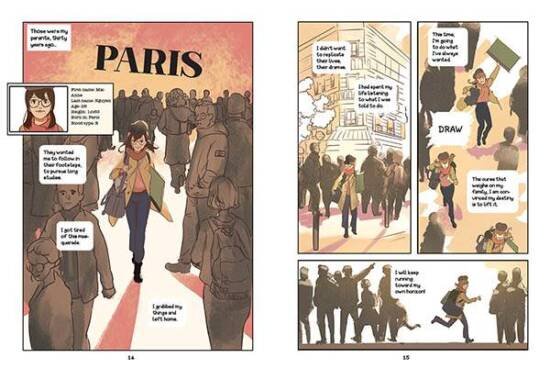
The story moves between Mai-Anne’s present-day adventures in the Parisian art community and memories of her childhood, gradually revealing the circumstances that shaped her family. Her parents arrived in France as Vietnamese refugees following the fall of Saigon in April 1975. Both had promising academic futures in Vietnam, but exile forced them to start over, working relentlessly to establish a secure life in a country where they had little money and few opportunities. Their experiences left them with an almost obsessive belief in education, professional achievement, and financial security.
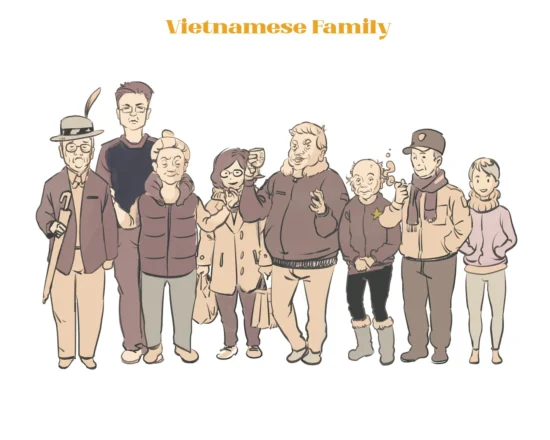
For Mai-Anne, this translated into a childhood filled with academic expectations, piano lessons, and an endless list of accomplishments. She became the model daughter, excelling at practically everything while quietly struggling with the feeling that none of it belonged to her.
Her relationship with her brother Minh was different. She wanted to protect him from the pressures she had experienced, and the two shared a childhood love of drawing. When he eventually abandoned his studies and disappeared, however, the family responded with silence rather than understanding. It is a cultural reaction that is difficult for outsiders to understand.
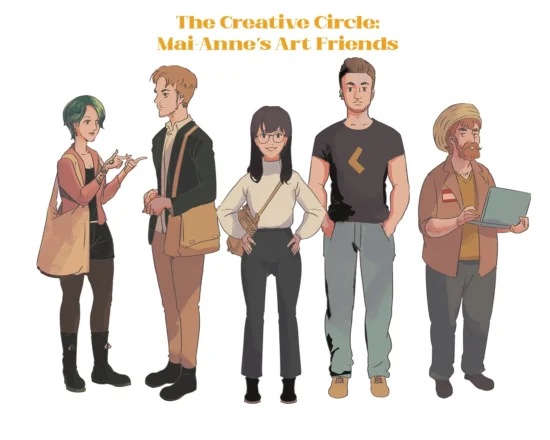
What makes the tension effective is that Anh-Thy doesn’t simply portray the parents as antagonists. Their behaviour is certainly damaging, and some of their confrontations with Mai-Anne are genuinely uncomfortable to read. But the story also takes time to explain where their attitudes come from. Their memories of war, displacement, poverty, and humiliation have left them terrified of losing the security they worked so hard to obtain. They see their children’s artistic ambitions as a threat to everything they sacrificed to build. Their insistence on conventional success is misguided, but it comes from a desire to protect their children using the only methods they know.
The book also makes room for the cultural experiences that shaped Mai-Anne’s upbringing. Her recollections of growing up in a predominantly Asian refugee neighbourhood near Paris are among its most enjoyable passages. There are amusing childhood anecdotes about food, family gatherings, neighbourhood friendships, martial arts fantasies, and the peculiar rules that govern life in a large Vietnamese household. These moments provide some welcome humour while giving the setting a strong sense of personality. They also establish what Little Saigon represents to Mai-Anne: a place where she once felt she belonged, even if that sense of belonging would eventually become more complicated.
Indeed, one of the more interesting developments comes when Mai-Anne visits Vietnam. Rather than experiencing an uncomplicated homecoming, she discovers that she is just as much an outsider there as she is in France. Her Vietnamese heritage is something she has inherited, but it is not necessarily something she knows how to inhabit. The experience reinforces the book’s central question about identity and belonging. This is the immigrant’s dilemma. What does home mean when the country of your parents is no longer quite yours, while the country where you were born never entirely feels like home either?

Visually, My Little Saigon is an impressive piece of work. Anh-Thy uses a warm, subdued palette of ochres, dusty pinks, muted blues, and earthy browns, giving much of the book the appearance of an old family album rendered in sepia. The character designs are expressive without being overly exaggerated, while the backgrounds are filled with small details that make the various locations feel lived in. Parisian cafés, crowded family homes, Vietnamese markets, and the artists’ shared studio all have their own distinct atmosphere. It is pretty.
Anh-Thy frequently allows the visual storytelling to reflect Mai-Anne’s psychological state. Panel boundaries become less restrictive, abstract shapes and flowing lines take over entire sequences, and surreal imagery appears alongside otherwise ordinary domestic scenes. There are moments when ancient dragons, floating figures, and intricate anatomical drawings seem to emerge from Mai-Anne’s imagination, giving visual form to emotions she struggles to articulate. The contrast between the rigid compositions of her family life and the more fluid, experimental artwork associated with her creative pursuits is striking.
The story eventually takes a much darker turn when Mai-Anne discovers what happened to Minh. His disappearance was not simply an act of youthful rebellion. He had been struggling with the same pressure to live up to expectations, and his death by suicide forces Mai-Anne to confront the limits of what she could have done to protect him. It is a difficult, horrible development, especially considering how much of her journey has been driven by the hope of finding him. The discovery also gives the book’s recurring imagery of inherited trauma a more devastating meaning.
Yet Anh-Thy avoids turning this revelation into a conventional story about overcoming adversity. Mai-Anne doesn’t suddenly find a way to repair everything that has been broken. Instead, she begins to understand her parents, her brother, and herself in ways that were previously impossible. Drawing becomes more than an escape from her circumstances or a means of proving her abilities. It becomes a way of processing memories, connecting different generations, and giving shape to experiences that have otherwise remained buried.
My Little Saigon strikes us as a deeply personal work. Occasionally its philosophical reflections become a little heavy-handed. Some of its dialogue unnecessarily repeats ideas that the artwork and preceding events have already communicated very effectively. Nevertheless, there is a compelling earnestness to the storytelling that makes these moments easier to accept. Anh-Thy is clearly invested in the subject matter, and that investment comes through in the amount of detail given to both the family history and the smaller, everyday experiences that make up Mai-Anne’s memories.
You can buy a copy of this title by way of this link: https://shop.nayth.art/book/saigon