

Writer: Andrea Chalupa
Artist: Brahm Revel
23rd Street, 2026
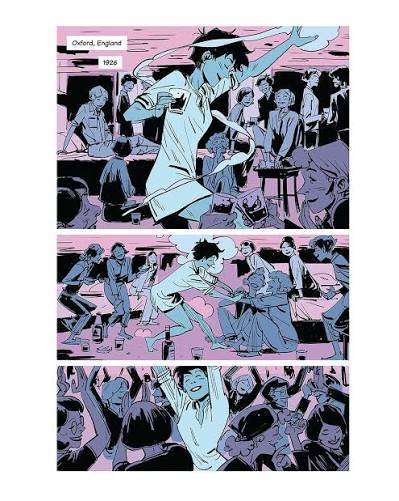
This is a 203-page fictional biography of the too-short life of Eileen O’Shaughnessy Blair. Eileen’s husband Eric Blair published his work under the pseudonym ‘George Orwell’. Orwell’s Animal Farm and 1984 have never been out of print. Save for some obscure biographies, Eileen is mostly forgotten.
Here is the promotional copy to this remarkable title:
Eileen Blair, wife and partner of George Orwell, is brought out of her husband’s shadow in this riveting graphic novel, which follows the couples’ tireless campaign to expose difficult political truths through art.
The Roaring Twenties are over, fascism is on the rise across Europe, and the dream of a workers’ paradise is all but dead. But in the midst of these turbulent times, a love story unfolds—one that will forever reshape our political language and how we view the future.
Mrs. Orwell follows poet Eileen Blair and her husband, George Orwell, as they forge the professional and romantic partnership that will eventually bring us Animal Farm and NineteenEighty-Four. From a honeymoon fighting in the Spanish Civil War to narrow escapes from Stalin’s agents and the London Blitz, the Blairs’ campaign against fascism brings them face-to-face with some of the greatest threats of the 1930s. But while George struggles to make his voice heard despite political censorship, Eileen must fight to preserve her own voice within a marriage that threatens to consume her.
This sweeping account of Eileen Blair’s brief but dazzling life casts a light on a long-overlooked figure and her persistent defense of that most beloved, most vulnerable principle: the power of the pen.
Honeymooning while fighting in a civil war in Spain is a very good indicator of the idiosyncratic characters of both Eileen and Orwell. We have categorised this title as a war comic. Mrs Orwell is not a war comic in the sense of tank duels or sea battles, but instead spends time demonstrating how guerrilla fighting conducted by amateur, politically motivated militia can lead to internecine conflict: the factions on the left opposing General Franco start to consume each other when they begin to lose the war. Upon Eileen’s and Orwell’s return to Britain, Orwell is unable to freely write about the treachery he has witnessed because the British Government fears offending their ally, Stalin. Simultaneously, Eileen finds herself smothered by a marriage to an emotionally dependent philanderer who happens to be one of the 20th century’s greatest writers. Writer Andrea Chalupa demonstrates flair in bringing to the fore the frustrations, the undercurrents of heavy emotions, and the fear repeatedly experienced by the couple. They each face more than their fair share of danger at home and abroad. But more so, to varying degrees over the years, Eileen and Orwell are at war with each other.
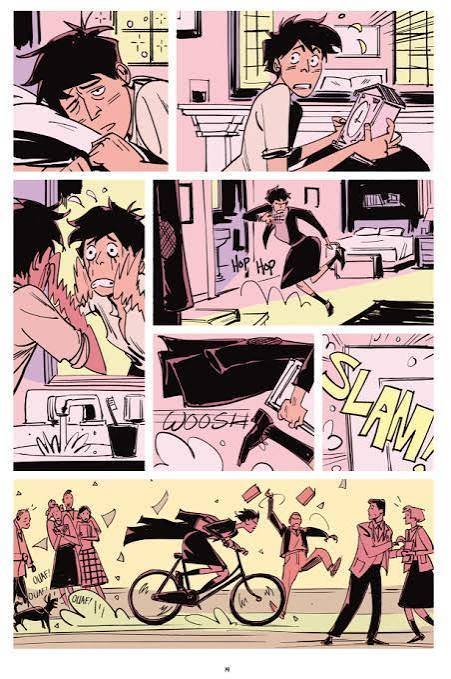
Ms Chalupa portrays Eileen as an effervescent character, and we can understand why she chose Eileen as the subject matter for an extended comic book biography. We rapidly come to like Eileen, just as Ms Chalupa very plainly intends us to with deft pace. We particularly admire Eileen’s cool head as she navigates the treachery of Stalinist intervention in Catalonia. Ms Chalupa emphasises the quick thinking of Eileen: recognising opportunities for escape, avoiding the traps of a false ally, and saving both herself and Orwell from imprisonment or a firing squad.
Ms Chalupa frames Eileen from the very beginning as completely unconventional, using the overt (one might say blunt) symbolism of Joan of Arc to signpost to readers that Eileen is a woman not afraid to challenge convention. Eileen is initially held back in her life by her brother Eric, a staid English country doctor, and one of the wonderful turning points in the title is when Eric abruptly and unexpectedly gives his blessing to Eileen and Orwell to go to Spain and help stop fascism, because it is the right thing to do. Eric later is killed in combat in France. Artist Brahm Reval’s depiction of Eileen’s grief upon learning of her brother’s death is a portrait of black despair, and stands in contrast to the engaging dynamism, and occasionally cartoon-ish and intentionally humorous style of the balance of the art. Mr Reval has done his time as a mainstream American comic book artist on X-Men and Teenage Mutant Ninja Turtles (and published a title through Oni Press in 2019 called Guerillas about Vietnam War soldiers who are, well, gorillas). In Mrs Orwell we think Mr Reval takes the opportunity to innovate. There are two pages where Eileen as Joan of Arc burst through of a panel leading a diminutive army of fellow feminists in a charge. We caught ourselves admiring this madness of artistic expression.
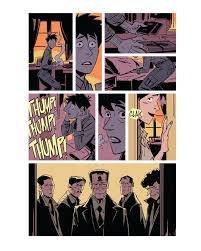
Mr Reval depicts Orwell as a tanned, with bedroom eyes and a suave Continental moustache. Orwell sleeps with Eileen’s friends with no real concealment from her of what he is doing. Orwell had relentlessly pursued Eileen until she finally agreed to marry him, and when he accuses her of an ‘affair of the heart’ as opposed to his repeated, purely physical encounters, Orwell’s semantics come across as overly-intellectualised, insipid excuses (this is one example of nuanced, outstanding characterisation by Ms Chalupa). And Orwell’s ego stopped him from giving Eileen proper credit in his novels for her contributions. There is no doubt both Eileen and Orwell were exceptionally brave and principled in choosing to resist fascism. But we do not especially like Orwell by the end of the title. Ms Chalupa makes it plain – Orwell is covetous and selfish.
Both of the main characters are ideologically impetuous. Mrs Orwell devotes many pages to the couple’s involvement with the international resistance against General Franco’s troops (really, it is a war comic). Some time ago Penguin Books published a long excerpt of Orwell’s writing about this time as ‘Fighting in Spain’ as part of its Great Journeys series, which details Orwell’s time with the Republicans, and his account of street fighting in La Rambla in Barcelona is chaotic and terrifying. But Orwell’s bullet in the neck in Mrs Orwell is not especially heroic. Orwell was carelessly off with the fairies on a cigarette break, and a sniper got a free shot.
We were first alerted to this title by a review in The Comics Journal: https://www.tcj.com/reviews/mrs-orwell/ and that review inspired us to write our own anti-thesis. We disagree with many aspects of that critique, including this paragraph:
Even the title poses a problem, namely that Eileen Blair never went by “Mrs. Orwell.” And, in fact, there later was a Mrs. Orwell, George’s second wife Sonia (née Brownell). The misnomer can be partly forgiven, however, as the biography is already plagued by a confusion of names. George Orwell was originally a pseudonym for Eric Blair, though the author slowly adopted it in life as well. Eileen’s beloved brother was also named Eric.
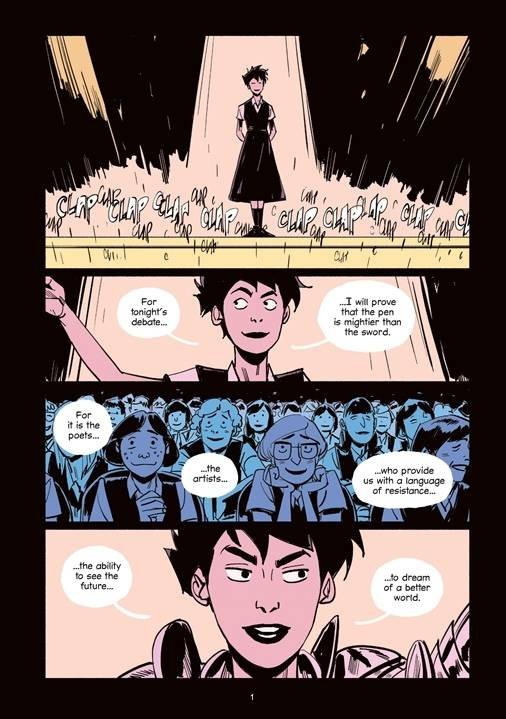
This shallow analysis misses the droll meaning of the title. Eileen was always more than Mrs Orwell, the ancillary wife to the great literary genius. She repeatedly rejected Orwell’s wedding proposals and was always her own person, nor merely the ‘Mrs’ in Orwell’s marriage. The passage concludes with a frankly prissy comment, that it is a work of historical fiction ‘even if in its detail it is not to be relied upon’. But Mrs Orwell is historical fiction as opposed to historical non-fiction. Mr Reval said as much in an Instagram post earlier this year https://www.instagram.com/p/DU1AraOgviJ/ :
To call it a “woman-behind-the-man” story would be accurate, but also very reductive… Eileen is a character so bold and full of life that she cannot be contained by the shadow of Orwell. While it is a biography, we still allowed ourselves the freedom to use some of the unique storytelling possibilities of the comics medium, as seen above.
Historical fiction is not an exercise in colouring between the lines, as any good critic knows.
Around the time we acquired a copy of Mrs Orwell, The New Yorker magazine published a review of a biography of Mary Todd Lincoln – a woman of sturdy ingenuity supporting a famous and powerful husband with emotional inadequacies and doubts (and who was after his death accused of female hysteria). How is it that these women, apparently forged of titanium, are overshadowed within the careers of their far more famous and influential husbands and be mostly unremembered? The Comics Journal critique offensively concludes its review with this passage:
We might consider such sacrifice admirable, regrettable, or reprehensible, but historically it is surely more common than not, and remains quite common today...No work of genius is truly the product of a single individual, for the simple reason that no life is fully lived in isolation. We depend on each other, even in our individualism. We make each other what we are. One’s very life is a kind of collaboration.
Again, this is off-kilter. If Orwell’s novels were a collaboration, then why did he not give Eileen the acknowledgement of co-authorship, which Eileen expressly notes within Mrs Orwell as being her due? Genuine collaboration involves proper acknowledgement of the contribution of all parties. ‘It is what it is’, The Comics Journal seems to ponderously affirm, as if the status quo of gender inequality is pointless to protest. We much prefer the fairer assessment of the relationship between the two complicated central characters from the No Flying No Tights blog: https://noflyingnotights.com/blog/2026/03/16/mrs-orwell/
With a world in violent chaos and a marriage fraught with turmoil and infidelity, this graphic novel shines a light on two incredibly influential writers—only one of whom remains widely known today... in tackling themes of fascism, war, censorship, art, and media—there’s a wealth of material here that remains all too relevant today. But in addition to uncovering lesser known biography and vital discussions about the nature of creation and resistance, the book is also simply fun to read. Entertaining and often funny, it succeeds on a narrative level as much as a historical one. It’s a feat to balance all these elements, and Chalupa has written a striking story about two passionate, flawed, messy, creative, and highly influential people which brings them to vibrant life within these pages.
Our only complaint is in the artistic depiction of Eileen. In this comic, Eileen is portrayed as pretty and fey, her unconventional personality exaggerated by a pixie cut. But in the end notes, the creative team publish a photograph of Eileen as she actually was: striking with intelligent eyes, but no Audrey Hepburn. it seems unnecessary that Mr Reval choose to depict her as winsome. There was more than enough otherwise to Eileen.
You can buy a copy of this outstanding title here: https://us.macmillan.com/books/9781250877857/mrsorwell/