

Writer: Ryan X. Messcher
Artist: Gabriel Fassina
Publisher: Page XIII Comics
Set against the bleak corporate landscape of Terranova City, The Muse from Page XIII Comics puts a grim science-fiction spin on the classic Faustian bargain. Written by Ryan X. Messcher, the comic follows Solomon Boone, a struggling traditional painter in June 2084 who is facing eviction while under increasing pressure to produce a masterpiece. His fortunes change when an enigmatic, machine-like woman arrives at his door with an extraordinarily disturbing offer: global fame in exchange for pieces of his own body.
Naturally, Solomon accepts.
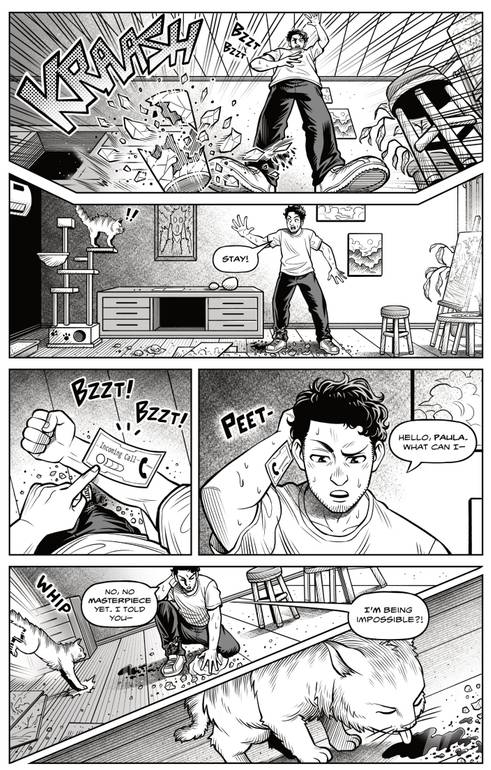
What initially appears to be a relatively small Faustian sacrifice quickly develops into something far more disturbing. The mysterious figure, whom Solomon comes to regard as his “partner,” offers exactly what he needs to become a celebrated artist. The cost, however, keeps increasing. Mr Messcher smartly avoids spelling out too much about the entity or where it came from, allowing the reader to discover the increasingly horrific nature of their relationship alongside Solomon.
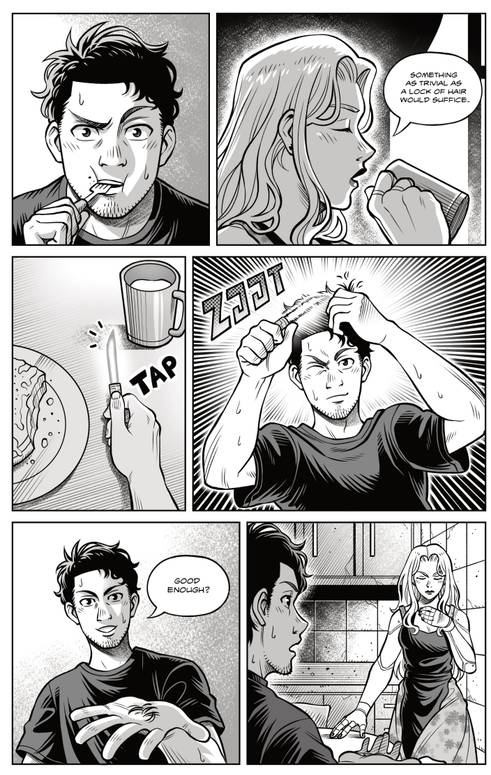
The story moves between different points in 2084 and 2085, showing just how quickly Solomon’s circumstances change. Within months, the unknown painter has gone from struggling to stay afloat to becoming a global sensation. Yet the success comes with an increasingly obvious physical and psychological price. The contrast makes Solomon’s downfall particularly effective because the comic never allows his newfound fame to completely overshadow the horrifying bargain that made it possible.
There is also considerably more going on in the backdrop of Terranova City than Solomon’s corporeal nightmare. Mr Messcher peppers the backgrounds with television reports and other details concerning declining human fertility, android services and increasingly powerful corporate monopolies. These elements aren’t explained through lengthy exposition. Instead, they quietly establish a future society that feels increasingly artificial and dehumanized. That makes Solomon’s dedication to the messy, physical process of traditional painting particularly interesting. His art represents something tangible and human in a world becoming increasingly dominated by technology and corporate interests.
Gabriel Fassina’s artwork and lettering are crucial to making those themes work. The futuristic city is rendered in cold, neon-drenched imagery, creating an immediate contrast with Solomon’s rough, physical paintings. The Muse herself occupies a machine uncanny valley, an uncomfortable space between attractive and mechanical, making it difficult to determine whether her appearance is supposed to be beautiful, threatening, or both.
The comic’s approach to body horror is particularly interesting. Mr Fassina uses a modern, manga-inspired visual language that can give even the most grotesque imagery a strangely cute or approachable quality. There is a stylization to the characters and expressions that almost makes the horror feel playful at first glance. Then the comic starts tearing into flesh.
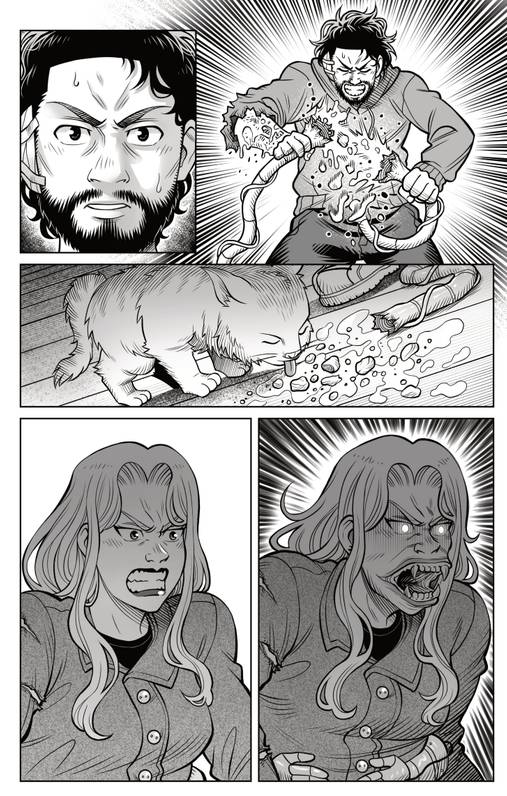
That contrast gives The Muse a distinctive flavor. The artwork can look deceptively cute and clean while still delivering the visceral excess expected from body horror. Large, aggressive sound effects such as “RRRIP” and “SPLURCH” make the violence impossible to ignore, while the increasingly exaggerated damage to Solomon’s body pushes the imagery into genuinely uncomfortable territory. It creates an unusual balance where the manga-inspired aesthetic acts almost like a filter over the gore without actually softening it.
As Solomon’s condition deteriorates, the visual mood shifts accordingly. The bright futuristic environments give way to something much more claustrophobic and nightmarish, with heavy shadows and increasingly harsh line work reflecting his transformation from desperate artist into something increasingly hollow. The contrast between the stylized presentation and the ugliness of what is happening to Solomon becomes one of the comic’s most effective visual tricks.
Messcher’s scripting deserves equal credit. The Muse is lean and fast-moving, and it never feels the need to over-explain its central mystery. Much of the world-building happens in the background, while subtle changes in the timeline communicate how quickly Solomon’s life is spiraling out of control. The dialogue is similarly restrained and believable, which helps sell Solomon’s desperation without turning him into a caricature of the tortured artist.
Most importantly, the comic understands that the premise works better when the reader is allowed to sit with it rather than having everything explained. The horror gradually becomes apparent through Solomon’s actions, the artwork, and the increasingly disturbing consequences of his bargain. By the time the full extent of his situation becomes clear, the comic has already established enough emotional investment for it to hit considerably harder.
The Muse is a nasty little sci-fi horror story with more on its mind than simple body horror. Its Faustian premise gives Mr Messcher room to explore artistic desperation, technological dehumanization and the price of success, while Mr Fassina’s artwork gives those ideas a suitably unsettling physical form. The manga-inspired aesthetic also gives the gore an unusual presentation, making the comic simultaneously cute, stylish and deeply unpleasant when it needs to be.
The Muse reminds us more than a little of Oscar Wilde’s The Picture of Dorian Grey. It is short, focused and remarkably efficient at creating a sense of dread. For a comic about an artist willing to give pieces of himself away for fame, The Muse makes its point with appropriately bloody precision: sometimes getting everything you ever wanted means discovering exactly what you’re willing to lose along the way. We trust that Mr Messcher and Mr Fassina did not pay a similar price for this excellent piece of artistic expression.